
Last updated November 16, 2026
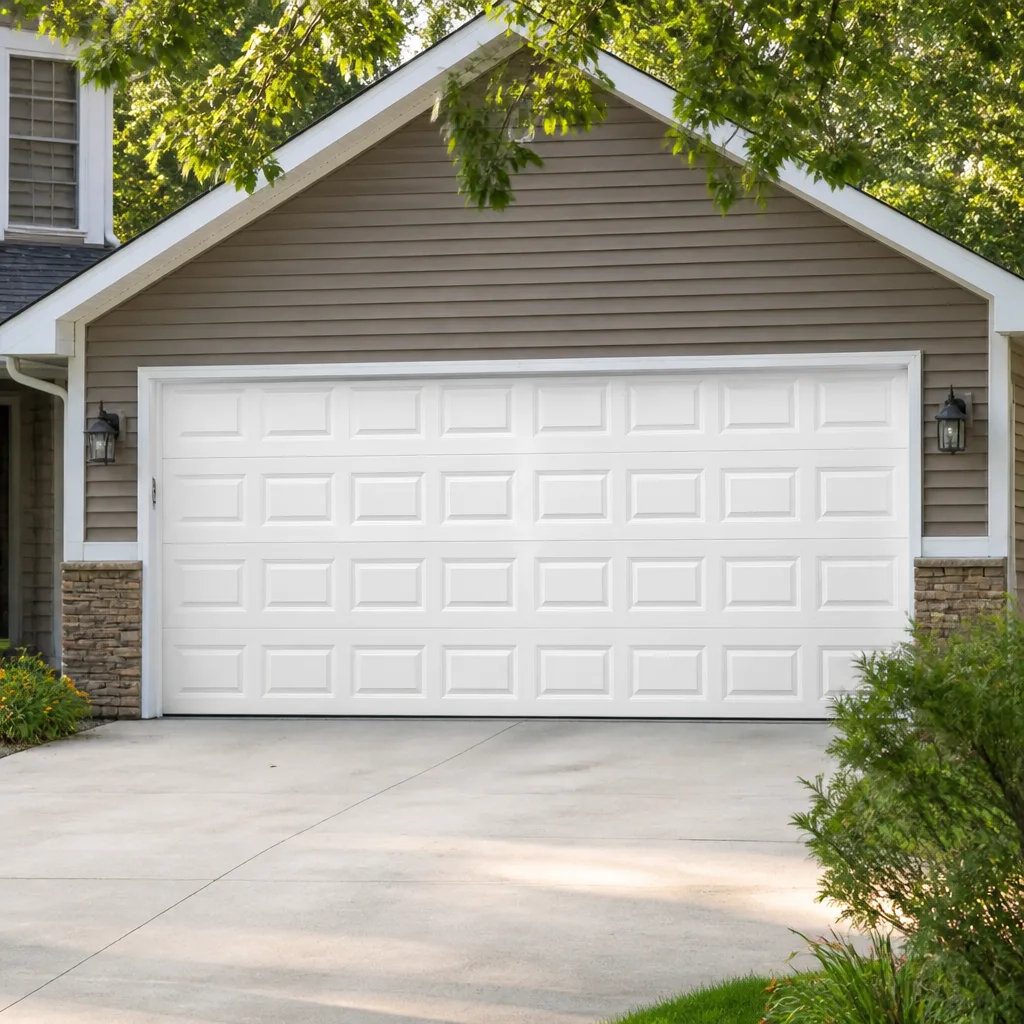 Raised-panel steel
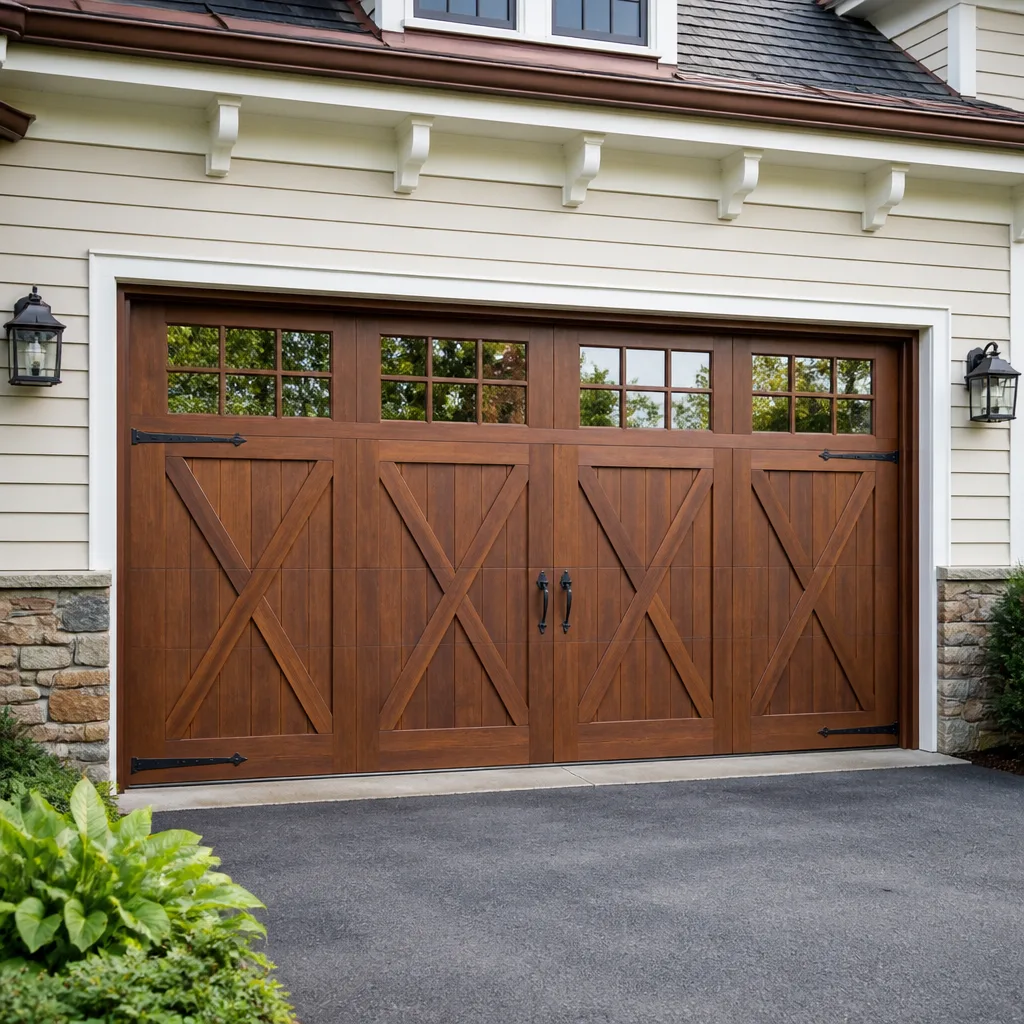 Carriage house
 Modern flush
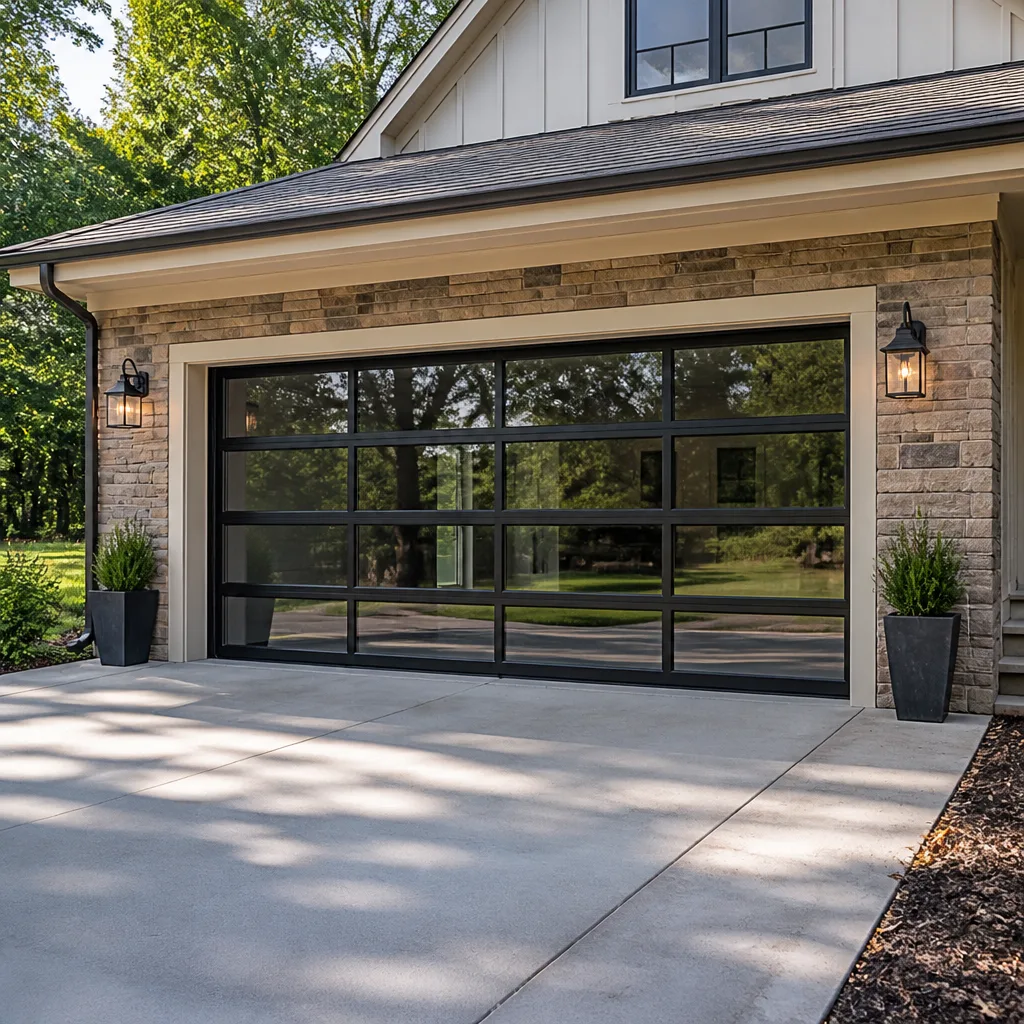 Full-view glass
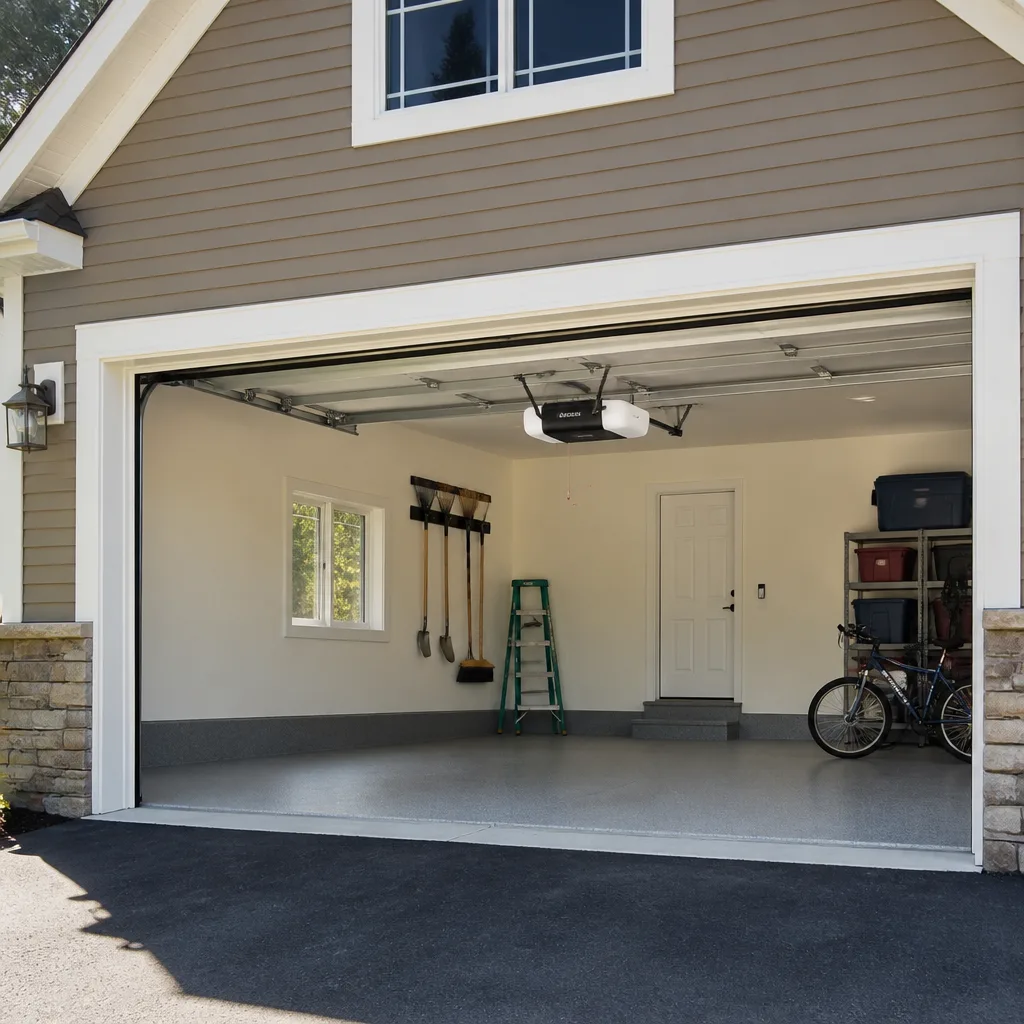 LiftMaster openers
 Chamberlain openers
Full 25-point door and opener safety check with every visit - springs, cables, rollers, tracks, and your LiftMaster or Chamberlain opener included
You get a price before we start. It does not change when the pro arrives.
Get your free estimateGarage Door Emergency Preparedness Guide for Waco Homes
Most Waco homeowners think about their garage door twice a year: when it opens, and when it doesn’t. That’s the wrong plan. The door that matters is the one you need to open during a hailstorm, a tornado warning, or the kind of ice event Waco saw in February 2021, when a stretch of freezing weather left driveways and streets glazed and a lot of doors that hadn’t moved in years suddenly needed to. We answer a lot of calls after weather like that, and a surprising share of them aren’t about broken springs at all. They’re about release cords that won’t pull, backup batteries that were never installed, and panels that should have been locked but weren’t. This guide covers the full emergency protocol: how to release your door by hand, what battery backup actually buys you, what to do before and after a Waco storm, and which situations belong to a technician.
Quick Answer
Garage door emergency preparedness in Waco comes down to three things: knowing how to release your door by hand (and testing it before you need it), confirming whether your opener has battery backup, and locking the door down before high wind. Most emergencies we see weren’t caused by the storm. They were caused by a part nobody had checked in years.
Styles & brands we work with
- Raised-panel steel
- Carriage house
- Modern flush
- Full-view glass
- LiftMaster openers
- Chamberlain openers
Table of Contents
- How Do You Open a Garage Door by Hand?
- Torsion vs. Extension Springs: Why the Release Differs
- Does Your Opener Have Battery Backup for a Waco Outage?
- Pre-Storm Checklist: Locking Down Before the Warning
- What to Do When the Door Is Stuck Partially Open
- Post-Storm Inspection: What to Check Before Normal Use
- Ice Events and the Manual Release Nobody Tests
- Common Mistakes to Avoid
How Do You Open a Garage Door by Hand?
You pull the emergency release cord, lift the door, and it stays up on its own springs. That’s the short answer, and it’s correct for most residential doors when the springs, cables and rollers are healthy. The catch is that “when they’re healthy” is the part nobody checks. The pull-release motion is simple. The diagnosis underneath it isn’t.
Before you ever need it, do this once:
- Stand inside the garage with the door closed and the opener disconnected from the door (the release cord handles that).
- Pull the release cord straight down and toward the door. It should move freely. If it feels stiff, gritty or stuck, stop and have it looked at before storm season, not during.
- Lift the door by hand about halfway. It should come up with steady resistance and stay put where you let go. A door that drops on its own means a spring isn’t doing its job.
- Lower it and reconnect the opener. Listen for the trolley to click back into place.
If the cord won’t pull, don’t force it. A release cord that’s fused to a rusted bracket is one of the more common things we run into around Waco, and applying force to a stuck cord can leave the door disconnected and halfway down with nothing holding it. That’s a call for a technician.
One more thing: never walk under a door held open by hand or by a propped object. Your springs are the only thing keeping a 150-to-300 pound door overhead. If they’re tired, the door is heavier than it looks. If you want to know what a proper inspection includes, our garage door repair page walks through what our technicians check.
Torsion vs. Extension Springs: Why the Release Differs
Torsion and extension spring doors release the same way at the cord, but the parts doing the lifting are completely different, and the failure modes aren’t the same. This is where most generic guides get people into trouble. They describe one procedure for both systems, and that’s how injuries happen.
Torsion systems carry a horizontal shaft above the door with springs wound around it. They’re the standard on most newer residential construction in Waco, and they’re what you’ll find on most Clopay and Amarr doors. When a torsion spring lets go, it makes a hard crack and the door gets heavy fast. There’s no safe DIY wound on the springs themselves. The shaft is under load every second the door is closed, and a person with no training can’t tell a tensioned spring from a relaxed one just by looking.
Extension systems run springs along the horizontal tracks above the door, stretched rather than wound. They’re common on older homes and on budget-conscious doors like many Wayne Dalton and Craftsman models. The springs stretch visibly, which tempts people into thinking they can judge the condition at a glance. They can’t. A stretched spring can still fail without warning, and an extension system has a second point of failure: the safety cable that runs through the middle of the spring to catch it if it breaks.
What to check, without touching the springs:
- Both springs on a matched pair should look alike. One that’s visibly tighter, sagging or separated is a warning sign.
- On extension systems, look for a cable running through each spring. If it’s missing or loose, that’s a safety gap.
- Look for gaps in the spring coils. A torsion spring with a visible gap has broken.
- Never wind, unwind or adjust a spring yourself. This is the one component in the whole system where the risk is genuinely serious.
Does Your Opener Have Battery Backup for a Waco Outage?
Some do and some don’t, and the only reliable answer is to look at the unit itself. Most residential openers currently sold by LiftMaster, Chamberlain and Genie either ship with battery backup or accept an add-on battery. Older Craftsman and Genie units often have no backup path at all. If you want certainty, find the model number on the back of the motor housing and check the manufacturer’s documentation. Our technicians work on all of those brands and can tell you in a few minutes whether yours has a path to backup.
What backup actually buys you during a Waco outage:
- Enough cycles to get the door up and down a limited number of times, not continuous operation. Treat it as an emergency budget, not a replacement for the power grid.
- An opener-specific figure, not a universal one. The runtime depends on the model, the battery’s condition and how heavy the door is.
- A door that will still cycle after a short outage, which is often the difference between getting a vehicle out and being stuck.
Two things to know before you rely on it. First, a battery that hasn’t been tested in a couple of years may not actually hold a charge. Test it the way you’d test a smoke alarm: unplug the opener, open and close the door once, then plug it back in. If it groans, replace the battery. Second, battery backup is an opener feature, not a door feature. It won’t help if the door itself is jammed, and it won’t help if the springs are broken. If you’re troubleshooting the opener itself, our garage door opener repair page covers what our technicians check first.
If you have no backup and want it, ask us to look at your opener on the next visit. We repair and replace the top residential opener lines, and we’ll tell you honestly whether an add-on battery is available for the unit you have.
Pre-Storm Checklist: Locking Down Before the Warning
Lock the door from the inside before high wind, and your garage door has a real chance of resisting what a tornado-warned storm throws at it. Leave it unlocked, or worse, rely on the opener’s hold, and the door can bow inward, jam the track and open the house to the storm. This matters in Waco. Tornado Alley runs right through this part of Central Texas, and the warnings we get sometimes come with only minutes of notice.
Do this when a warning goes up:
- Close the door completely. A partially open door is the worst position it can be in for wind.
- Engage the manual lock if you have one. Older doors with a slide bolt near the center stile use it the same way they always did.
- If you have an opener, engage the manual release so the opener’s hold isn’t the only thing keeping the door down. The opener’s drive is designed to move a door, not to resist a pressure load.
- Clear anything loose from the floor of the garage: trash cans, garden tools, boxes. Wind-driven debris inside a garage does damage on its own.
- Move vehicles out of the garage if there’s time and a safe direction to park. A car is safer than a door you can’t get through.
- Shut the interior door between the garage and the house, so that if the garage door does fail, the house is still sealed.
On an automatic system with no manual lock, the release plus a closed door is the best you can do. On a manual system, use the slide bolt. Either way, once the warning passes and the door is still down, check the tracks and panels before you try to raise it.
What to Do When the Door Is Stuck Partially Open
Stop pushing the button, and get the door down before the storm hits if the door will move at all. A partially open door is more dangerous in wind than a stuck closed door, because wind gets underneath it. The safe sequence is to disconnect the opener, check whether the door is binding in the track, and lower it slowly by hand if it will move. If it won’t, leave it and get yourself and your family to the interior of the house.
What’s safe:
- Pulling the release cord once, cleanly, and waiting to see what the door does.
- Looking at the tracks for a bent section, a popped roller or a cable off the pulley. If you can see the cause, you know not to force it.
- Lowering the door by hand if it moves freely. Guide it down with one hand on the bottom edge; don’t stand under it.
What makes it worse:
- Pressing the opener button repeatedly to “walk it down.” A door that’s binding in the track can come off a roller under strain.
- Prying the door back into a track with a screwdriver or a pry bar. Panels bend, rollers pop, and the fix becomes a repair instead of an adjustment.
- Cutting a release cord or a cable to force the door loose. Cutting a cable under tension is a real injury risk, not a hypothetical one.
- Leaning on the door from outside to force it open. Your door isn’t designed for that load, and neither is the track.
If the door is half open and won’t budge, that’s a call. We answer 24/7. Fast dispatch from 7am to 7pm, Sunday through Friday, and a call outside dispatch hours gets booked into the next opening. If the situation is genuinely urgent and the weather is closing in, call and we’ll talk through the safest thing to do while you wait.
Post-Storm Inspection: What to Check Before Normal Use
After a hailstorm or a wind event, check the door before you run it. Waco gets hail the way some cities get rain, and a door that survived a storm can still have a dent line or a bent track that will eat the opener the first time you cycle it. A walk-around takes five minutes and can save a repair.
- Look at the panels from the street. Hail leaves dents, dimples and paint cracks. A single panel can often be replaced on its own, especially on doors like Amarr and Clopay systems with panel-by-panel construction.
- Check the tracks. Stand at each side and sight down the track. It should be straight. A slight bow from wind is worth a professional look before the opener drags a roller through it.
- Look at the springs. One broken, one intact? A gap in the torsion coils, or an extension spring that’s stretched or hanging? Don’t operate the door.
- Check the cables at the bottom corners. A cable that’s slack, frayed or off its drum means the door shouldn’t be cycled until it’s corrected.
- Look at the hinges and rollers. Hail rattles these loose. A hinge that’s pulled from the panel or a roller out of its track is a mechanical problem, not a cosmetic one.
- Listen before you run it. When the door is clear of obstructions and the tracks look right, run it once. Any new scraping, popping or uneven track sound gets a call.
Do not run the opener “to see if it’s fine.” If the door is bound, the opener’s safety reverse will usually catch it, but the strain on the opener’s gears and the door’s hardware still happens. Call first if anything looks wrong. If the damage is panel-level and the door is otherwise sound, that’s often a repair, not a replacement. We work on the door you have, whether it’s a Raynor system with a few hail dents or a Genie opener that’s started acting up.
Ice Events and the Manual Release Nobody Tests
Waco’s winters are mild enough that most homeowners assume ice won’t be a problem. Then a February event like the one in 2021 arrives, and the manual release that’s sat untouched for years turns out to be the most important piece of hardware on the door. During that event a significant share of the calls we took were from homeowners who couldn’t open their garage by hand: the release cord had fused to a rusted bracket, the door was heavier than they expected, or the springs were already tired and nobody had noticed. A 60-second annual check would have caught every one of those.
Here’s what an ice event actually exposes:
- A release cord that won’t pull. The bracket it rides in is exposed to humidity all year. Rust builds up slowly, then all at once.
- Rollers that don’t roll. Sealed bearings dry out. A door that cycles normally in May can feel like it’s dragging by February.
- Springs at the edge of their life. Cold makes tired metal more brittle. A spring that was “probably fine” in summer is the one that breaks on the coldest morning.
- An opener with no backup. No power, no opener. If your release cord is frozen and your backup is absent, you’re locked in.
The check is simple, and you should do it every fall before the first cold front:
- Stand inside the garage and pull the release cord down. If it resists, call for a technician before winter.
- Lift the door by hand to about waist height. It should stay put when you let go.
- Roll each roller with a gloved hand. Any that feel gritty or bind get replaced.
- Test the opener’s backup battery by unplugging the opener briefly.
If the release cord is stuck, don’t cut it. That’s the one cord you need working, and cutting it leaves the door connected to an opener that can fail with no way to disconnect. Have it serviced. It’s a small fix, and on a cold morning it’s the difference between driving to work and waiting for a technician. Our technicians have up to 11 years of experience with exactly this kind of system, and we’d rather see it in the fall than in February.
Common Mistakes to Avoid
- Never testing the manual release. It’s the single piece of hardware most likely to fail you in a real emergency, and the one nobody checks. Pull it once a year, even if you’ve never needed it.
- Assuming every opener has battery backup. Some do, some accept an add-on, and older units often do neither. Look at the model number, not the sales brochure.
- Leaving the door partially open before a storm. A partially open door catches wind under the bottom panel. Close it fully, even if that means the car stays inside.
- Trying to bend a track back into place. Track that gets forced usually fails on the next cycle. A minor alignment in a Waco garage is a small fix; a bent track that derails a door isn’t.
- Running the door after hail without looking at the panels. A dented panel is fine. A panel that’s separated from its hinge is a door that’s about to bind, and the opener takes the damage.
- Cutting a release cord or cable to free a stuck door. Cables are under tension. Cutting one with anything other than proper tools and training is a real injury risk.
- Calling a generalist handyman for a spring or opener problem. Garage doors are what we do. A generalist may be perfectly capable, but they’re learning your door on your dime. A dedicated garage door technician has seen the failure before.
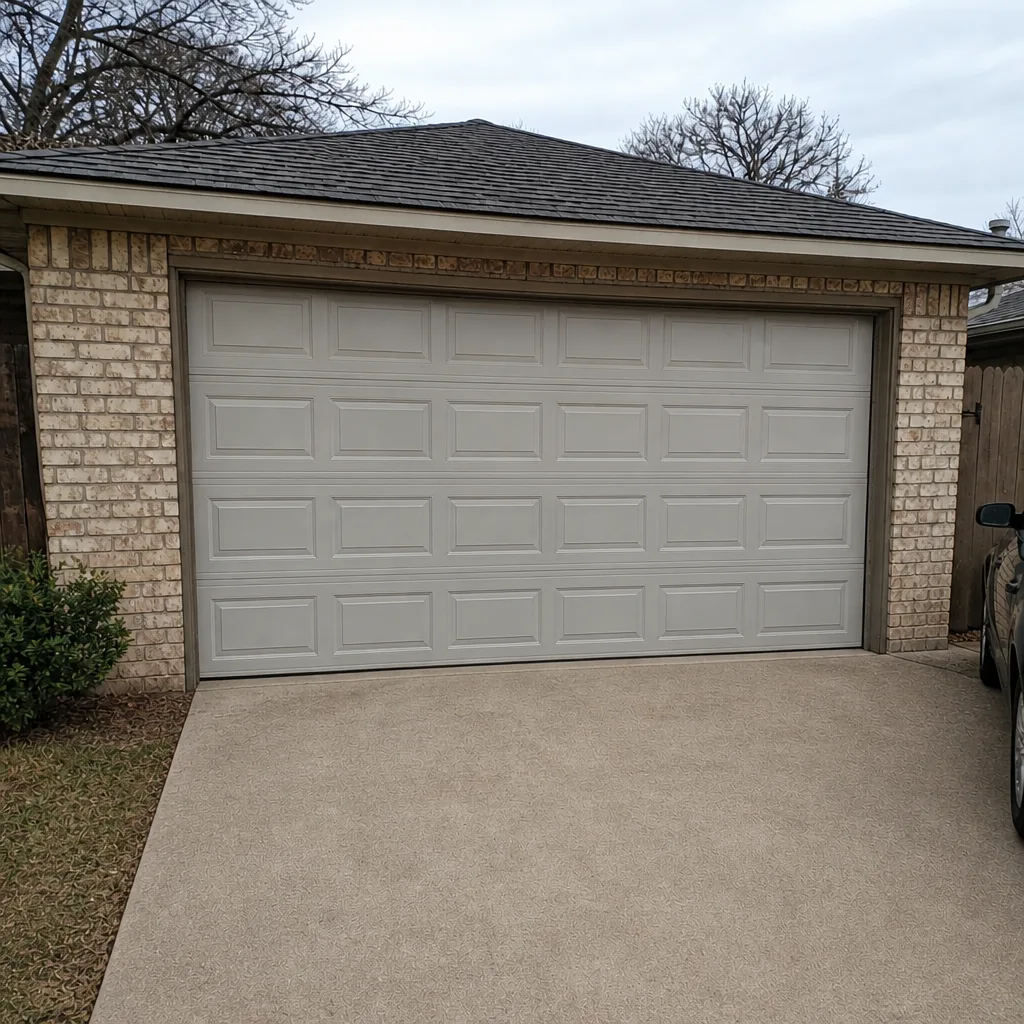
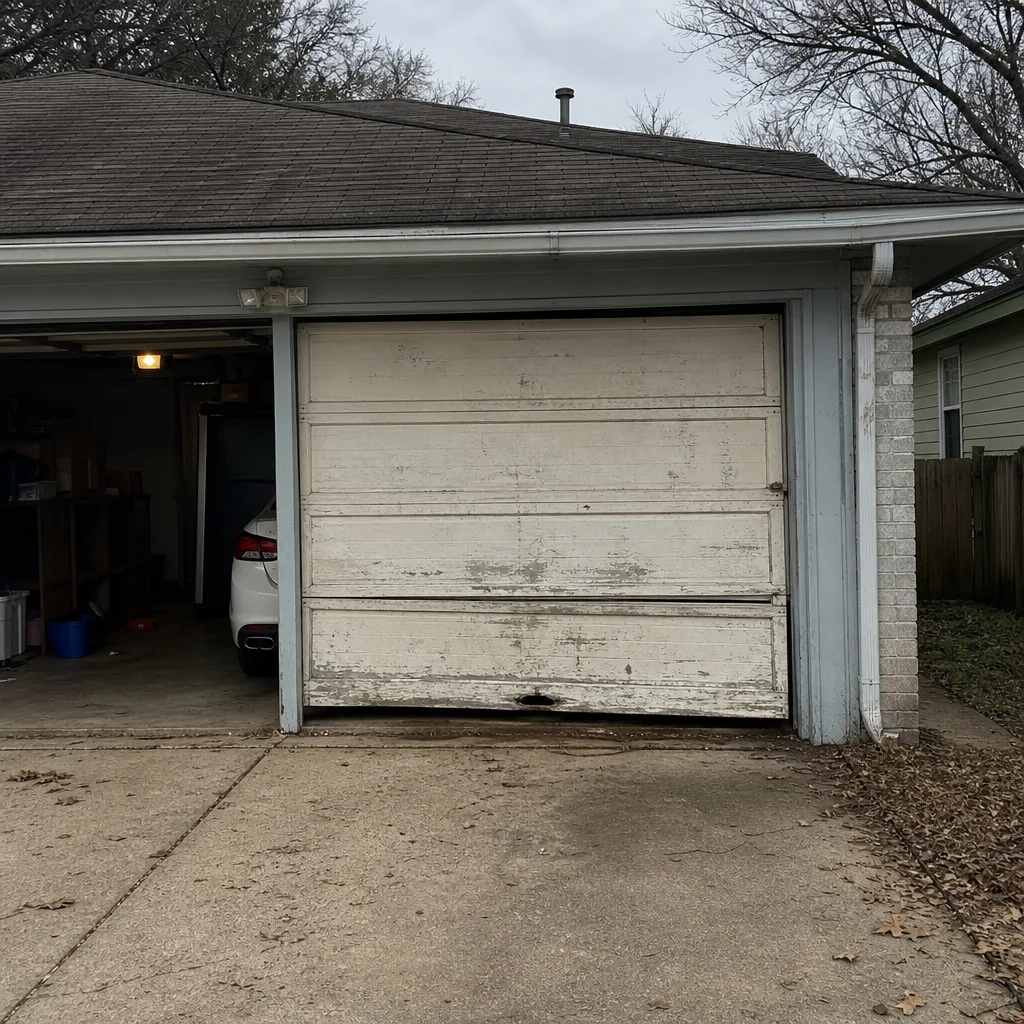
See the difference
 Before
 After
 Before
 After
 Before
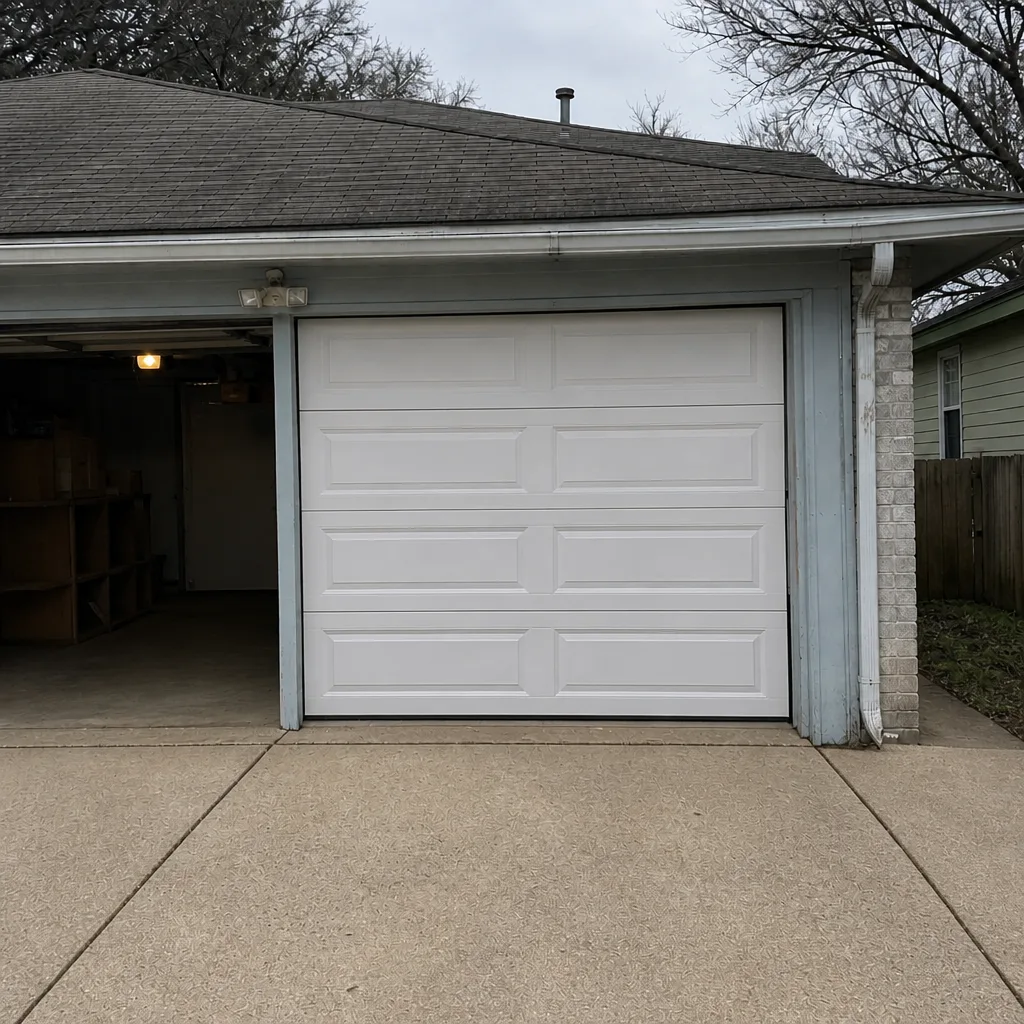 After
When to Call a Professional
Call us when the release cord won’t pull, when the door drops on its own, when a spring is visibly broken or looks mismatched, when the door is stuck partially open and won’t lower by hand, when the track is bent from wind, or when the opener won’t reverse and the door is binding. Those are the calls where a trained technician makes the difference. Also call if you’re not sure: a quick look is free, and it’s better than guessing. We repair first when repair is the right answer, and we’ll tell you honestly when a door has reached the point where replacement is the better spend.
Waco Garage Door Service offers free estimates in Waco. Call (855) 916-7192. We answer 24/7. Fast dispatch from 7am to 7pm, Sunday through Friday. The price is quoted and agreed before any work starts, so the written estimate is the number.
Frequently Asked Questions
Pull the emergency release cord down and toward the door, then lift the door by hand. The springs do the lifting if they’re healthy. If the cord won’t pull, don’t force it: call us and we’ll get someone out. Our technicians have up to 11 years of experience and work on LiftMaster, Chamberlain, Genie and Craftsman openers.
Some do and some don’t, and the model number on the motor housing is the only reliable answer. Most current LiftMaster and Chamberlain units either ship with backup or accept an add-on; older units often have neither. If you want to know, we can tell you in a few minutes on a service visit. Call (855) 916-7192 for a free estimate.
Disconnect the opener, check the track for a visible binding point, and lower the door by hand if it moves. If it won’t move, get to the interior of the house and call us. Don’t force it and don’t cut anything. We answer 24/7. A call outside dispatch hours gets booked into the next opening, Sunday through Friday, 7am to 7pm.
Most residential doors last a long time with maintenance, but the springs, rollers and opener are the wear items. Waco’s heat and the occasional hail event stress the exterior panels; the springs and opener care more about cycles than about weather. A door that cycles four times a day ages faster than one that cycles once. Free estimate if you want us to assess yours.
Yes, our technicians are licensed and insured. We only work on residential garage doors and openers, so the technician who shows up is a garage door technician, not a generalist. Call (855) 916-7192 for a free estimate.
No. The written estimate sets the final price, and we quote and agree it before any work starts. That’s true for repairs, opener work and full installations. The only thing that changes the estimate is a scope the customer asks us to add. Call (855) 916-7192 for an exact quote, and estimates are free.
The Bottom Line
The garage door emergency you’ll face in Waco is most likely a wind event that tests a door nobody locked, an ice event that tests a release cord nobody pulled, or an outage that tests a battery nobody installed. None of those are hard problems if you plan for them, and all of them are expensive surprises if you don’t. Test your release cord once a year. Check your opener’s battery backup. Lock the door down before wind. Inspect the panels and tracks after hail. And when the door is beyond a five-minute check, call a dedicated garage door technician rather than guessing. That’s the whole protocol.
If it’s already happened, or you’d rather not do the checks yourself, call (855) 916-7192 for a free estimate. We work on your brand, whether that’s a LiftMaster opener or a Raynor door, and we repair first when repair is the right call. We answer 24/7. Fast dispatch from 7am to 7pm, Sunday through Friday. You can also learn more about Waco Garage Door Service and the areas we cover in Waco.
Written by the team at Waco Garage Door Service.