
Last updated November 16, 2026
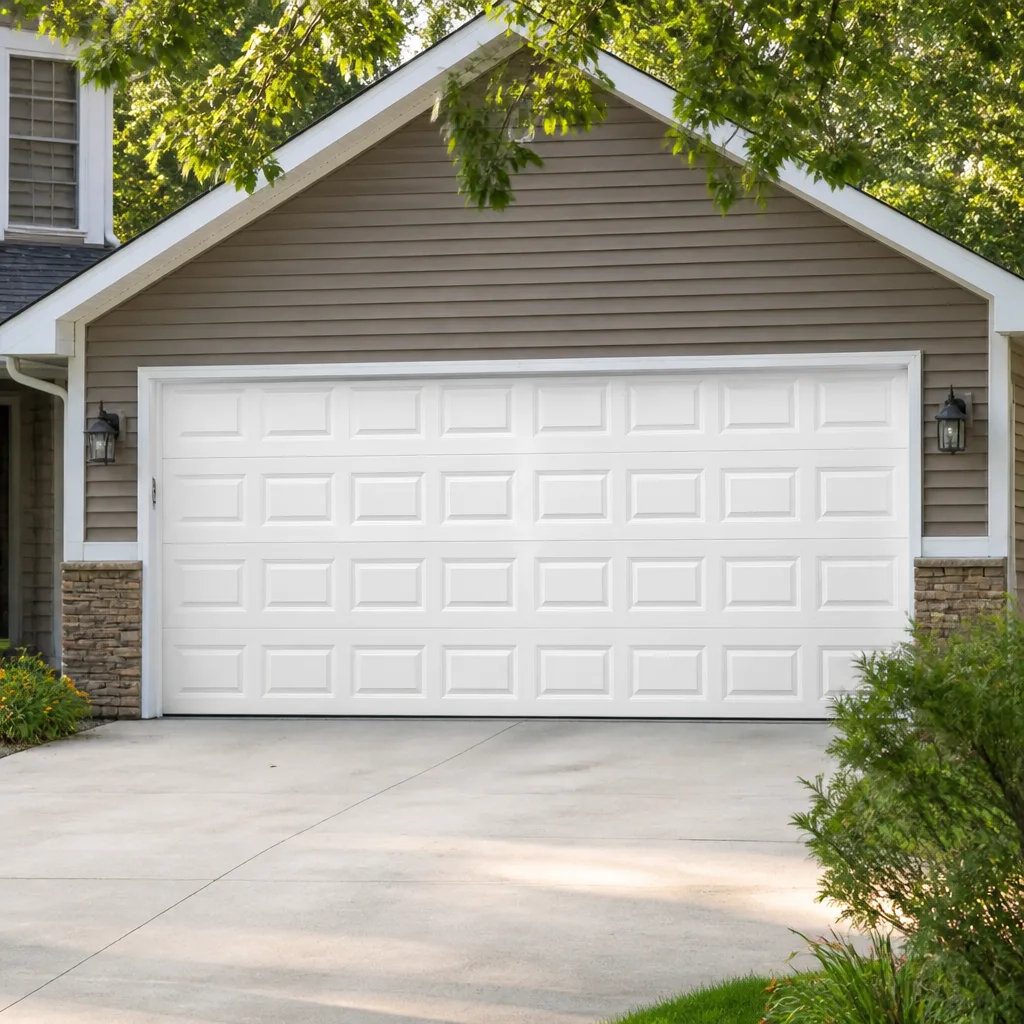 Raised-panel steel
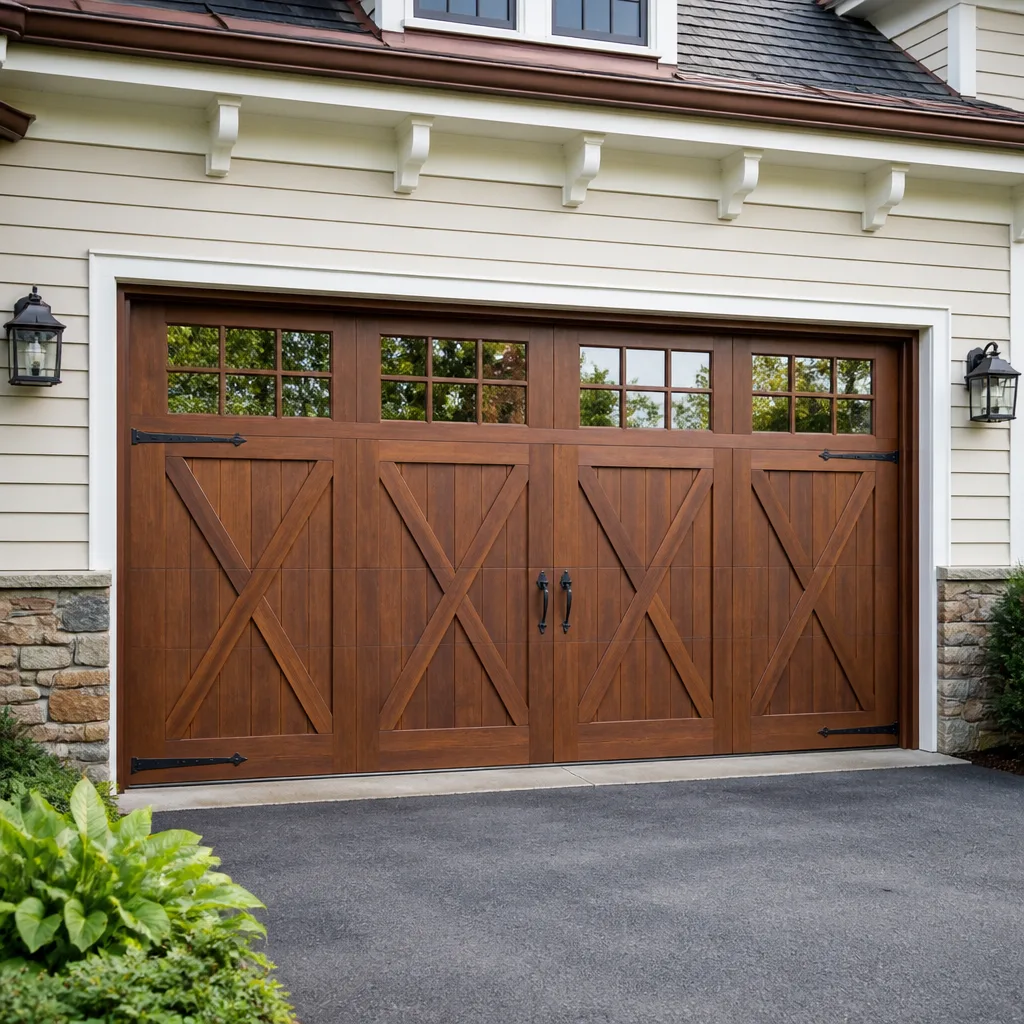 Carriage house
 Modern flush
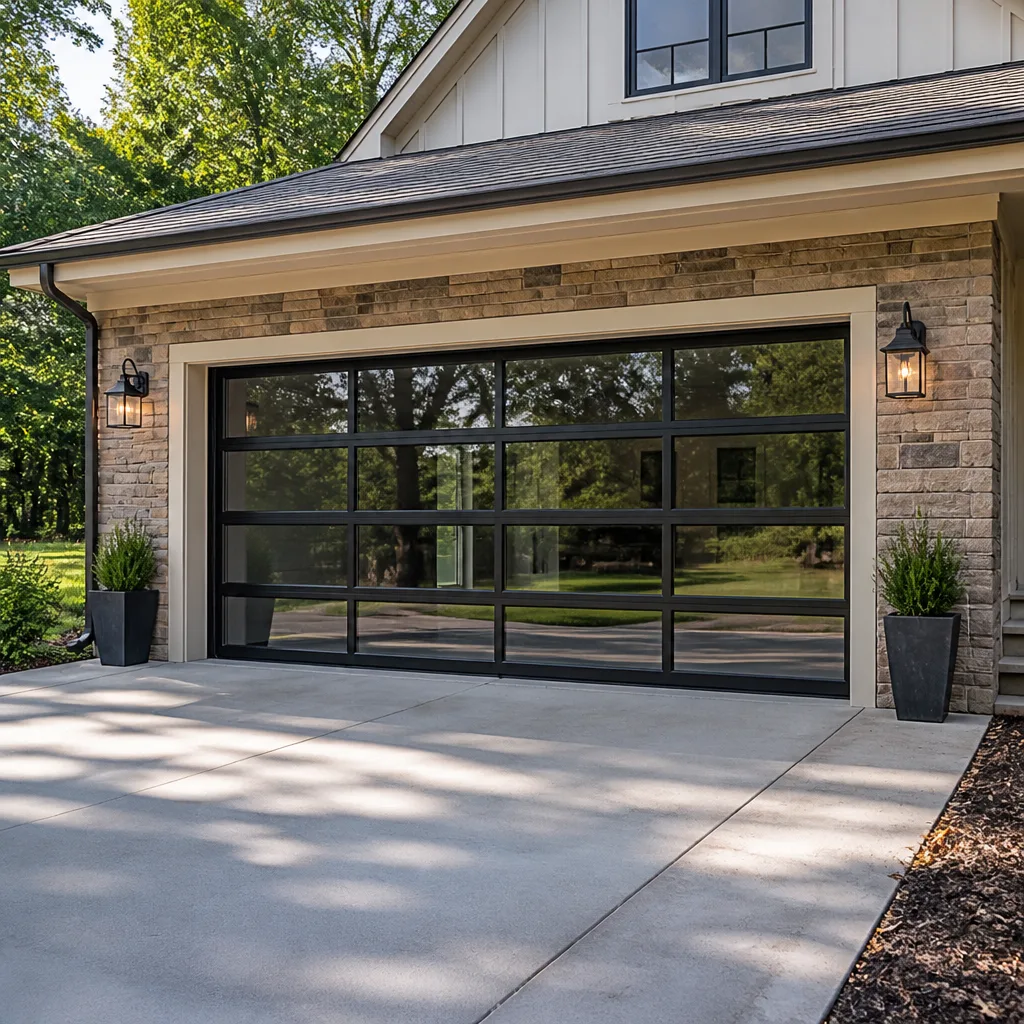 Full-view glass
 LiftMaster openers
 Chamberlain openers
Full 25-point door and opener safety check with every visit - springs, cables, rollers, tracks, and your LiftMaster or Chamberlain opener included
You get a price before we start. It does not change when the pro arrives.
Get your free estimateGarage Door Warning Signs: A Waco Homeowner’s Reference Guide
The grinding noise your door makes on the way up isn’t the door “warming up” – it’s a roller that’s lost its nylon coating and is now metal-on-metal against the track, which means the track itself is next. Most garage door failures don’t arrive without notice. They arrive with weeks of notice, in the form of sounds and sights that homeowners have quietly filed under “it’s always done that.” This guide is a translation key. We’ll walk through what each sound means mechanically, which visual patterns point to real corrosion versus harmless surface oxidation in Waco’s humidity, which warning signs mean “schedule service this week” versus “don’t touch that door,” and the one complaint homeowners always mention that technicians almost always discount – plus the two they never notice until the door stops working.
Quick Answer
Garage door warning signs in Waco fall into four mechanical categories: roller and track wear (grinding), spring fatigue (popping, slow lift, uneven travel), loose hardware (rattling), and bearing/drive failure (squealing). A grinding or popping door should be scheduled for service within the week; a door that reverses on its own, lifts inches and stops, or hangs off its track should not be operated until a technician has looked at it. Ignoring early signals is what turns a repair into a replacement.
Styles & brands we work with
- Raised-panel steel
- Carriage house
- Modern flush
- Full-view glass
- LiftMaster openers
- Chamberlain openers
Table of Contents
- What Each Sound Tells You: A Mechanical Translation
- Visual Signs in Waco’s Climate: Real Corrosion vs. Surface Oxidation
- Three Urgency Levels: This Week, Stop Using It, and Tonight
- Reading Your Opener: What Intermittent Reversals and Slow Travel Actually Mean
- Common Mistakes to Avoid
- The Sign You Always Mention and the Two You Never Notice
- When to Call a Professional
- Frequently Asked Questions
What Each Sound Tells You: A Mechanical Translation
A garage door is a mechanical system with roughly 200 moving contact points, and every one of them makes a distinct sound when it fails. The problem is that our ears lump them together. A technician listens in layers: first the rollers, then the hinges, then the springs, then the opener drive train. You can apply the same approach.
Here is what each of the four most-reported sounds usually indicates:
- Grinding. A grinding sound, especially on one side of the door and louder on the way up, usually points to a nylon roller that has lost its coating and is now running metal against metal inside the track. Left alone, the roller erodes the track itself, and a damaged track can’t always be repaired in place. Grinding on both sides at once often traces back to worn hinges instead.
- Popping. A single loud pop, or a series of them that only happen near the top of travel, typically comes from a torsion spring that has started to break. Popping that happens at a consistent point in the door’s travel and sounds metallic and sharp is spring-related. Popping that sounds looser and comes from the hinge line points to loose or stretched hinge plates.
- Rattling. Rattling is the least serious of the four and the easiest to fix. Loose bolts on the hinges and roller brackets, a track that has shifted a fraction of an inch, or a bottom bracket that’s worked itself slightly free all produce rattle. The concern with a persistent rattle is that vibration gradually loosens adjacent hardware.
- Squealing. Squealing is a friction sound, and in the garage door world friction is almost always a bearing or roller going dry. It can also come from the opener’s drive gear, particularly in older units from Genie or Craftsman.
In our experience, a door that only squeals and doesn’t grind or pop is often the cheapest to bring back to quiet, because bearings, rollers and lubrication are accessible without disassembling the door’s balance system. A door that grinds and pops together is the one to schedule this week.
Visual Signs in Waco’s Climate: Real Corrosion vs. Surface Oxidation
Waco’s humidity does real work on steel, but not all rust is a problem. The trick is learning to tell the difference between the orange-brown film that forms on any steel surface exposed to damp air and the darker, textured, pitted corrosion that’s actually eating the metal.
Surface oxidation looks like a thin, even film of pale orange on hinges, roller brackets and the bottom bracket of the door. You can wipe it off with a rag and it doesn’t come back immediately. It’s cosmetic, and a light coat of white grease typically stops it.
Real corrosion looks different: darker rust, textured like a sponge when you look closely, concentrated along seams and welds, or around fasteners where the steel has begun to flake. On a bottom panel, corrosion often starts where the weatherstrip meets the door because condensation collects under the seal. If you run a fingernail across a brown spot and the metal underneath feels pitted rather than smooth, that’s real corrosion and the panel needs attention.
Three visual checks worth doing twice a year in Waco:
- Track alignment. Look down each vertical track from the floor. The gap between the track and the door edge should be uniform from bottom to top. Any lean toward or away from the door means the track has been bent or shifted.
- Cable condition. Cables on the outside of each side should look tight and even, with no fraying, curling or visible kinks. Frayed cables are a stop-using-the-door sign, not a watch-and-wait sign.
- Door balance. Disconnect the opener (pull the red release), lift the door to about halfway, and let go. A healthy door stays roughly where you left it. A door that drifts down on its own has spring fatigue, and drift gets worse in both directions as the spring continues to weaken.
If you have a Wayne Dalton or Clopay door, both brands use torsion spring systems where the balance is most easily disturbed, and drift on those doors often shows up faster than on lighter doors.
Three Urgency Levels: This Week, Stop Using It, and Tonight
Not every warning sign demands the same response. A technician triages every warning sign into three buckets, and you can do the same. The reframe matters because homeowners either panic over the small ones or shrug at the serious ones, and both mistakes cost money.
Schedule service this week:
- Grinding on the way up (worn rollers)
- Popping that happens predictably near the top of travel (spring early fatigue)
- Persistent squealing (dry bearings or rollers)
- Rattling that didn’t used to be there (loose hardware)
- Door balance drift on the manual release test (weak spring)
Every one of these is fixable as a repair, and the point of scheduling within the week rather than within the month is that the damage compounds. A grinding roller costs a roller to fix this week. Left for six months, it costs the roller and the track.
Stop using the door until repaired:
- A visibly frayed or curling cable
- A door hanging off one side of its track, or a bend you can see in a track rail
- A door that reverses back down on its own without obstruction
- Loud popping from a torsion spring on a door that is very stiff to lift by hand
Cables and torsion springs are high-tension components, and a failure while someone is under the door is a serious injury risk. Do not attempt to adjust, remove or “help” a spring or cable yourself; only a trained technician with the right tools should touch those components.
This will fail tonight:
- A door that hangs visibly by one side and drops that side when the opener is triggered
- An opener that runs but the door doesn’t move at all (broken drive or snapped spring)
- A cable that has already snapped and is visibly loose on one side
If you’re in the third bucket, don’t operate the door at all. Call us at (855) 916-7192. We answer 24/7. Fast dispatch from 7am to 7pm, Sunday through Friday.
Reading Your Opener: What Intermittent Reversals and Slow Travel Actually Mean
Your opener is a diagnostic instrument. It’s the part of the system that reacts first when the door’s mechanical condition changes, and the way the opener behaves tells an experienced technician what is failing elsewhere in the system before they even get out of the vehicle.
Here’s what each opener behavior usually points to:
- A slow-traveling door that used to move normally. Slow travel almost never means the opener motor is dying. It usually means the opener is working harder than it used to because the door has become heavier: a spring has lost tension, or rollers have stiffened. The opener’s safety system is sensing extra load. On a LiftMaster or Chamberlain unit, it often shows up as slightly slower lift and faster descent, which is the opener compensating for a door that’s fighting it.
- Intermittent reversals. A door that stops and reverses halfway up, or goes back down after starting to close, is usually triggering either the safety beam or the opener’s force limit. If nothing is blocking the beam, the force limit is the more common culprit, and it’s usually a sign the door’s mechanical load has changed. On newer units with smart ledgers, this is often logged, which is worth checking before a service call.
- Remote lag or shrinking range. A remote that used to open the door from down the block and now only works up close usually has a battery issue or a metal obstruction between the remote and the opener’s antenna. If lag gets worse over a few weeks, the opener’s receiver board is worth testing.
- The opener runs but the door doesn’t move. This means the drive has disconnected from the door. Common causes: a snapped spring, a broken trolley, or a disengaged emergency release that wasn’t re-engaged. If the door also hangs at an odd angle when you pull it up by hand, don’t run the opener; call us. See garage door opener repair for the full breakdown of what repair looks like across the major opener brands.
We work on LiftMaster, Chamberlain, Genie and Craftsman units for repair and replacement, so opener behavior on any of those brands is something we can diagnose without guesswork. And if your opener is past the point where repair makes sense, we install new units too, from budget Wayne Dalton lines through premium Clopay and Amarr systems.
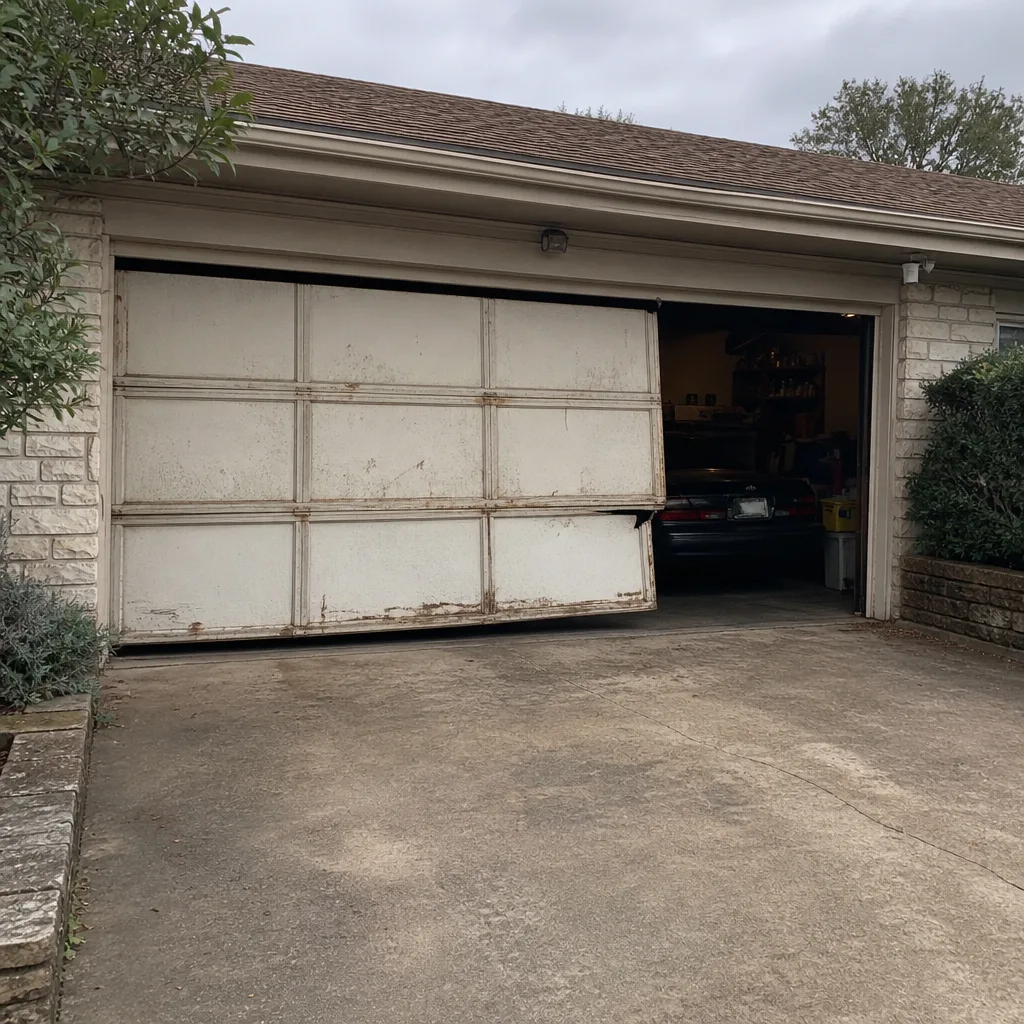
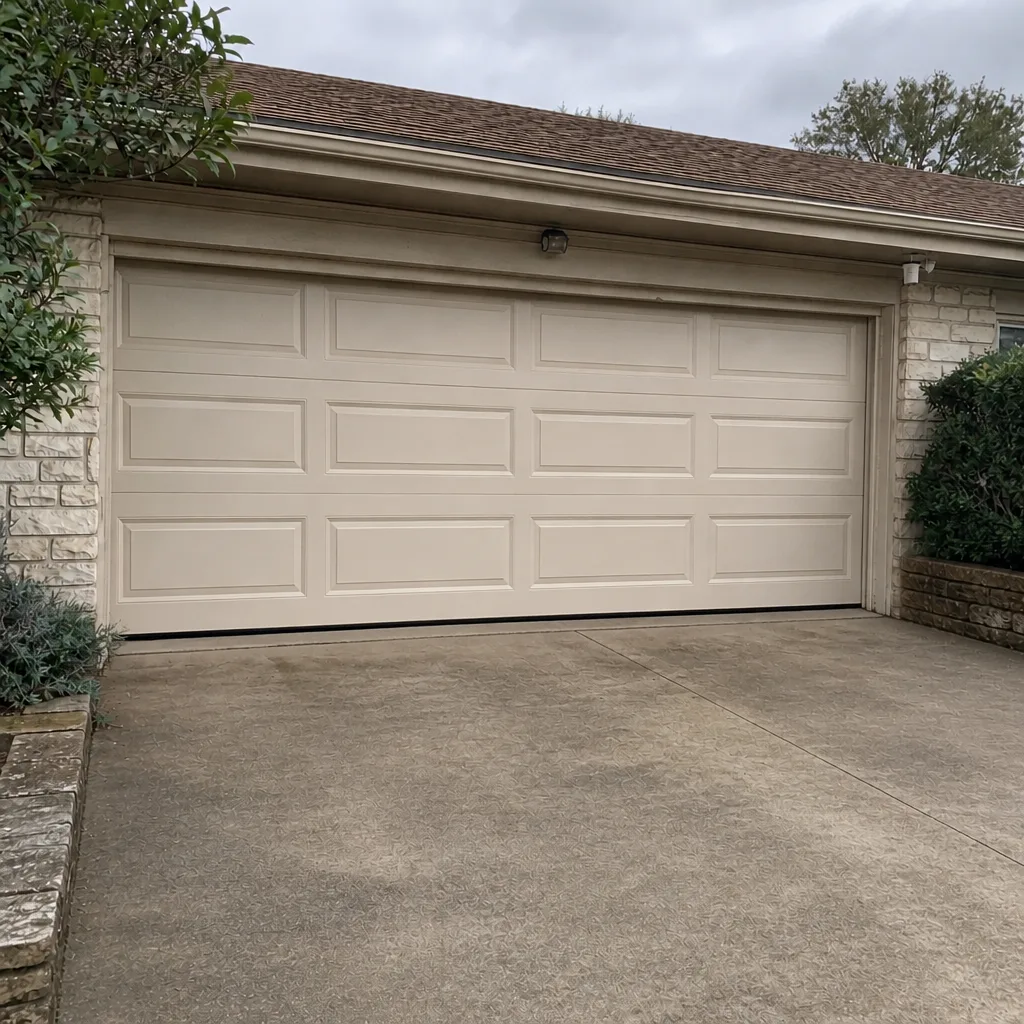
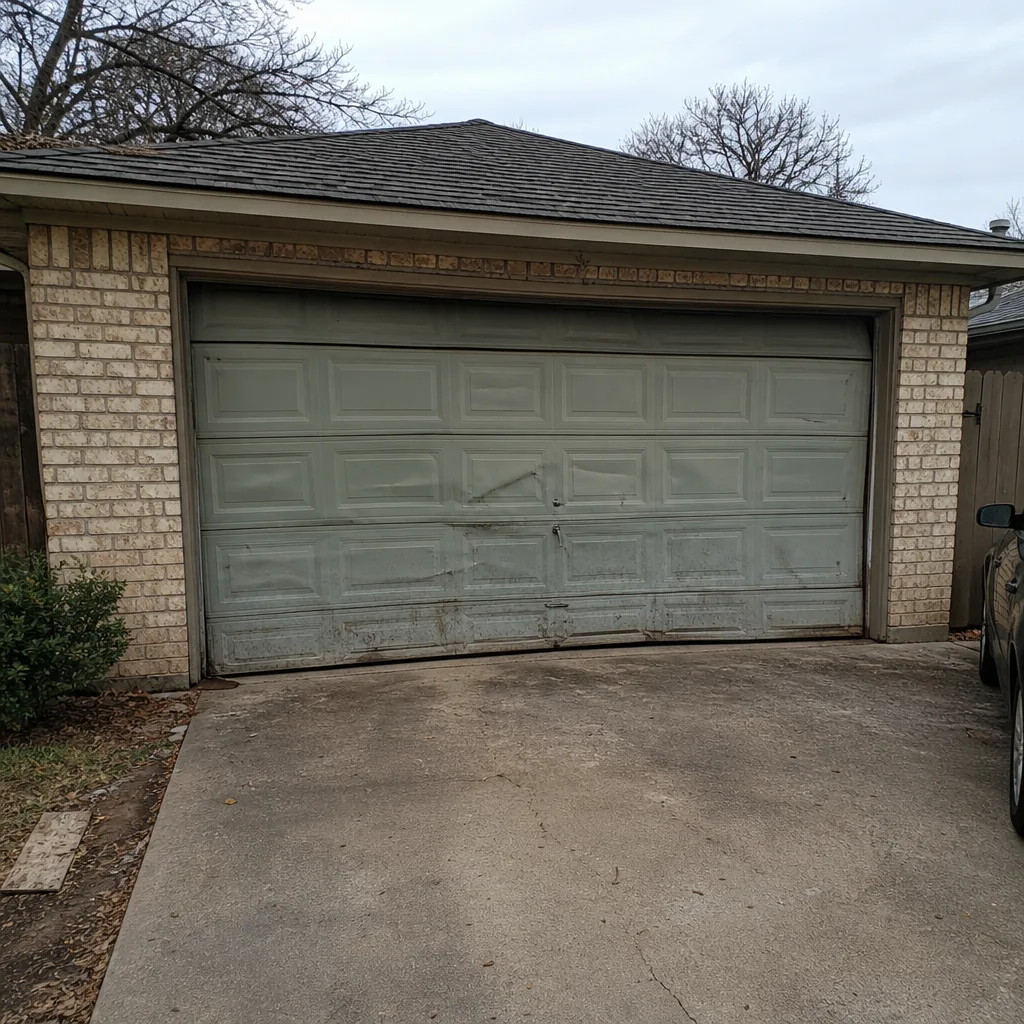
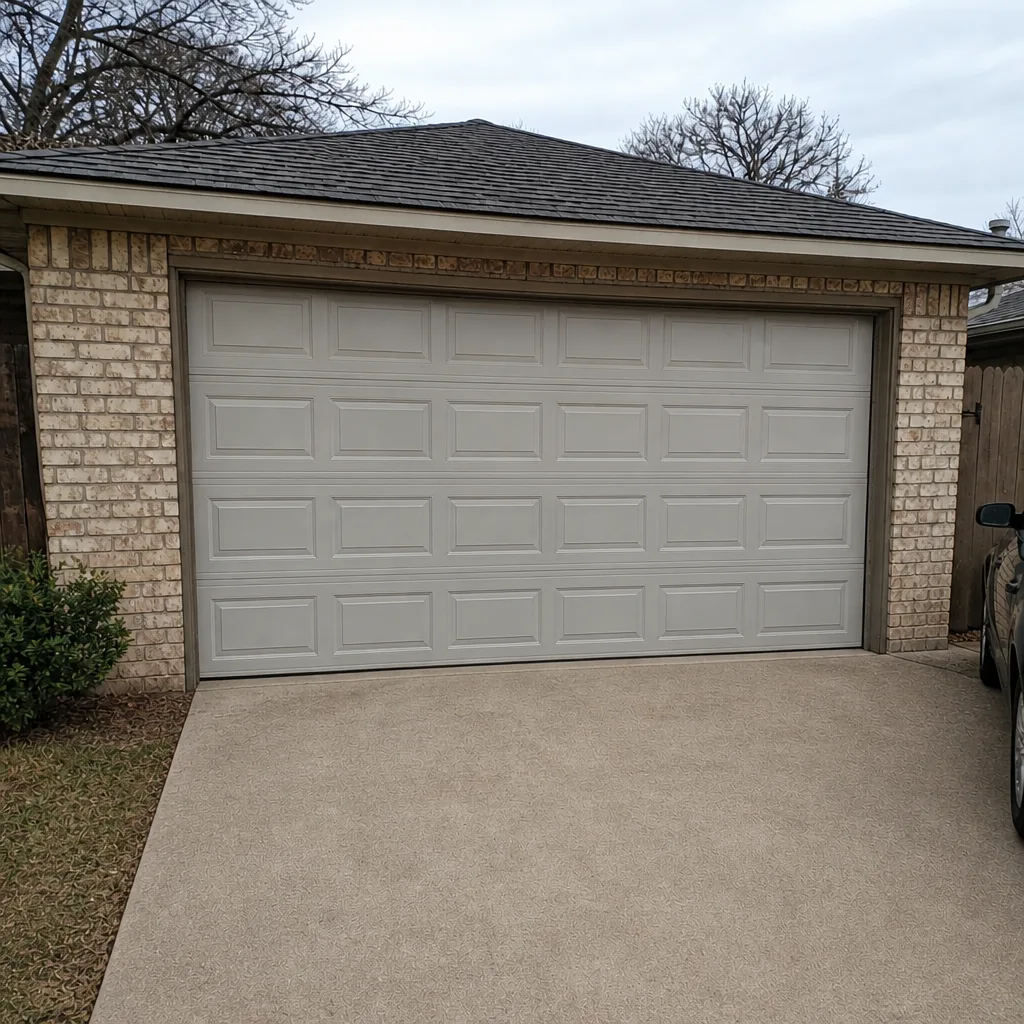
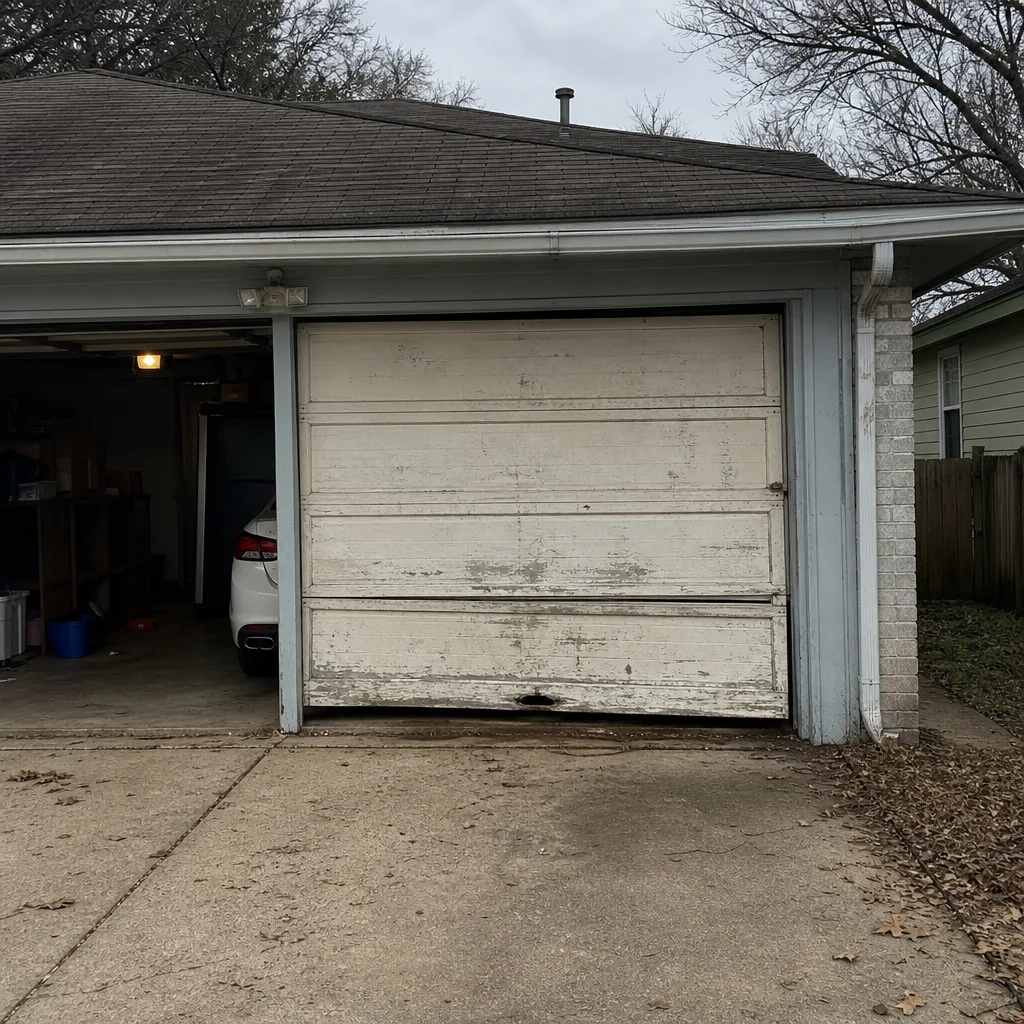
See the difference
 Before
 After
 Before
 After
 Before
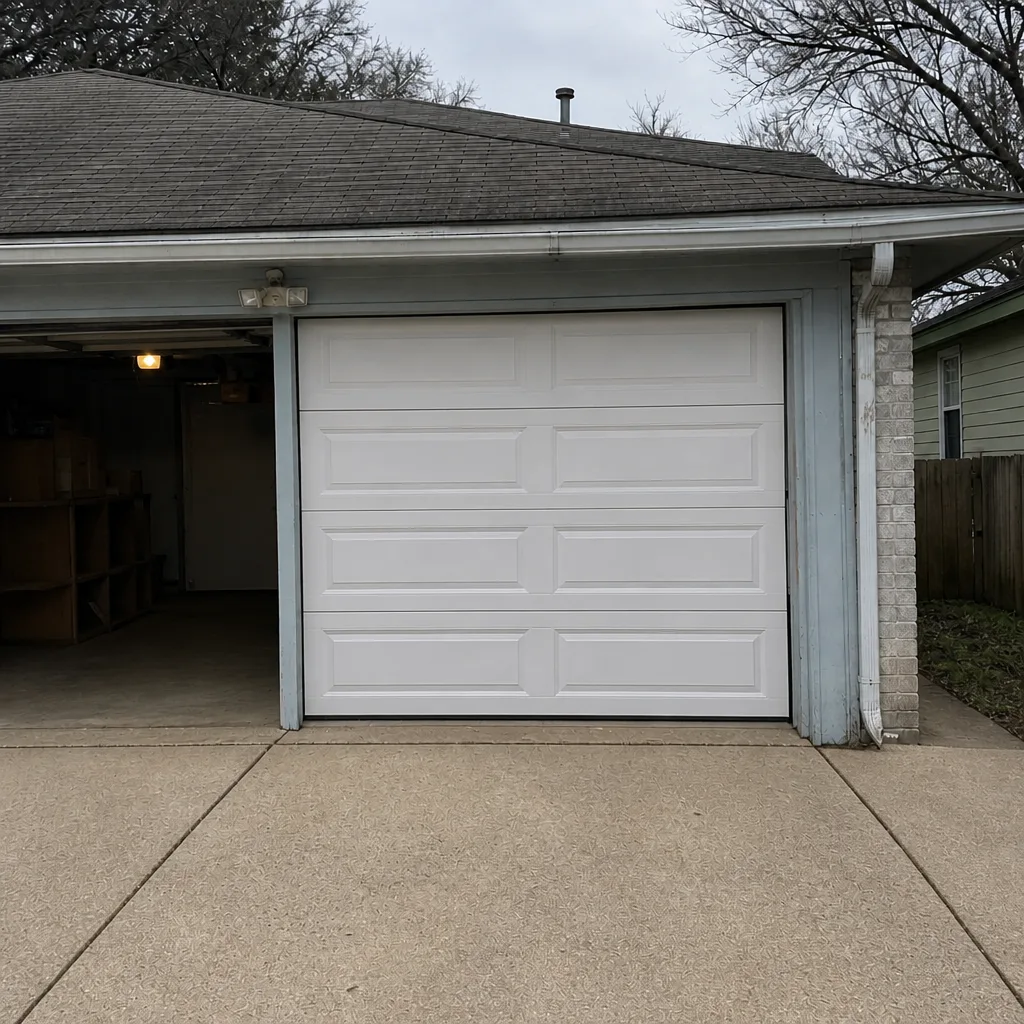 After
Common Mistakes to Avoid
- Greasing a grinding door and calling it fixed. Grease quiets the sound for a few days but doesn’t restore a roller that has lost its nylon coating, and it hides the metal-on-metal wear from the next inspection. A worn roller needs replacing, not lubrication.
- Waiting for a spring to “settle.” A torsion spring that has started popping will not settle; it will fail, usually at the worst possible moment, and usually with enough tension to be a real injury risk to anyone under the door. Call a technician instead.
- Adjusting the opener’s force limit upward to “help” a struggling door. This is one of the most common mistakes homeowners make, and it’s the one that turns a manageable repair into a door that could drop. The force limit is a safety feature; if it’s tripping, something mechanical needs fixing.
- Letting a door rattle for months because it “still works.” A rattle that persists loosens adjacent hardware, and loose hardware on a moving door can eventually damage the track. In Waco’s humidity, the loosened bracket is also where real corrosion starts, because moisture gets in behind it.
- Using a generalist handyman for spring or cable work. Springs and cables carry enough stored energy to break bones if handled incorrectly. A dedicated garage door technician has the right tools and experience for the balance system; a generalist usually doesn’t, and the risk isn’t worth the price difference.
- Assuming a slow door means the opener is dying. A slow door is almost always a mechanical problem (spring or roller), not the opener, and replacing the opener alone doesn’t fix it. The right fix for your door is usually the simplest one; the opener is the last thing to suspect, not the first.
- Skipping the twice-a-year check. Ten minutes with a flashlight once in spring and once in autumn catches most of the patterns this guide describes before they become expensive. It’s the single cheapest thing you can do for your door.
The Sign You Always Mention and the Two You Never Notice
Every technician who has repaired door systems in Waco for any length of time has had the same experience. A homeowner calls about the noise. And the noise is almost never what’s actually causing the problem.
The sign homeowners always mention: the noise. Grinding, popping, squealing, rattling – all four sounds get lumped into one complaint (“it’s making a noise”), and all four point to different mechanical causes. Noise is the entry point, not the diagnosis. The good news is that the noise complaint is usually the earliest warning sign you’ll get, which means there’s time to fix the underlying cause before it becomes structural.
The first sign homeowners almost never notice: the door’s balance. The manual-release test (pull the red release, lift the door halfway by hand, let go) tells you within ten seconds whether your spring system is healthy, and almost no homeowner runs it. A door that drifts down on its own is already in spring fatigue. The spring will fail eventually, and the failure is sudden. The test is free and takes less than a minute.
The second sign homeowners almost never notice: the safety reverse. Place a two-by-four flat on the floor under a closing door. The door should reverse within a couple of inches of contact. If it doesn’t, the safety reverse has failed, and that’s the single most important emergency feature on your door. It’s also the feature most likely to fail silently, because nobody tests it until something important rolls under a closing door.
Both of these silent failures are why we recommend the manual-release test and the two-by-four test as your two routine checks. If either fails, call us. For the full breakdown of what we do on the repair side, see garage door repair.
When to Call a Professional
You should call a professional when the warning sign involves a spring, a cable, a track that’s visibly out of alignment, or a door that won’t stay open. These are genuinely dangerous components, and a trained technician is the right answer for all four. You should also call a professional if the door balance test fails, if the safety reverse test fails, or if your opener has begun reversing on its own.
Waco Garage Door Service offers free estimates in Waco. Our technicians have up to 11 years of experience, and we work on your brand – whether it’s Clopay, Amarr, Wayne Dalton, Genie or anything else on the house – so you’re not pushed toward a brand that isn’t on your door. Call Waco Garage Door Service at (855) 916-7192. We answer 24/7. Fast dispatch from 7am to 7pm, Sunday through Friday.
Frequently Asked Questions
Grinding on the way up is the most common warning sign we diagnose in Waco, and it almost always traces back to rollers that have lost their nylon coating and are now running metal on metal against the track. Grinding is rarely the door itself; it’s the wear parts attached to it. Call (855) 916-7192 for an exact quote – estimates are free.
Spring repair pricing in Waco is quoted per spring by a written estimate, and a matched pair is usually replaced together, which roughly doubles the cost of a single spring. The estimate sets the final price and is agreed before any work starts. Call (855) 916-7192 for an exact quote – estimates are free.
Yes, same-day service is available. We answer 24/7 and dispatch is fast from 7am to 7pm, Sunday through Friday. If your door is stuck open with a house behind it, or hangs off one side, don’t operate it before a technician has seen it. Call (855) 916-7192 for an exact quote – estimates are free.
No. The price is set by the written estimate and agreed before any work starts, and the written estimate is the price. If the technician finds an additional issue on the door, you get a second written estimate before anything extra is done. Call (855) 916-7192 for an exact quote – estimates are free.
Yes. The technicians we dispatch are licensed and insured, and they work on your existing brand rather than pushing a replacement system you don’t need. We repair what you have – panel, spring, cable, track, opener – and only recommend replacement when the repair genuinely doesn’t make sense. Call (855) 916-7192 for an exact quote – estimates are free.
Surface oxidation is a thin, pale orange film you can wipe off, and real corrosion is darker, textured, concentrated around seams and fasteners, and feels pitted when you run a fingernail across it. Surface oxidation is cosmetic; real corrosion means the panel or hardware underneath needs attention. Waco’s humidity drives real corrosion faster along the bottom weatherstrip, so check that seam twice a year. Call (855) 916-7192 for an exact quote – estimates are free.
The Bottom Line
Garage door failures are patient. They announce themselves in grinding, popping, rattling and squealing; in a door that drifts on the balance test; in an opener that reverses without obstruction; in a cable that frays; in a safety reverse that no longer trips. Homeowners who learn to read these signals schedule repairs instead of replacements and stay ahead of the danger signs. Homeowners who wait end up calling when the door is already down. Our service area covers homes across Waco, and our team works on whatever brand is on the door – no replacement upsell unless it’s the right call. If you’ve noticed any of the signs in this guide, call (855) 916-7192 for a free estimate. We answer 24/7. Fast dispatch from 7am to 7pm, Sunday through Friday.
Written by the team at Waco Garage Door Service.